Viral Diseases That Impact Global Public Health

Viruses are microscopic infectious agents capable of affecting humans, animals, and plants. While many viral infections cause mild illness, others can lead to severe disease, long-term health complications, and significant public health challenges.
Over the past century, the world has witnessed numerous viral outbreaks that have shaped healthcare policies, research priorities, and disease prevention efforts. Advances in medicine, vaccination programs, and public health infrastructure have helped reduce the burden of many viral diseases, yet new challenges continue to emerge.
Global travel, urbanization, climate factors, and population growth all influence how infectious diseases spread. As a result, understanding viral diseases remains an important aspect of public health education.
Pharmacy9, our goal is to provide evidence-based information that helps readers better understand the health challenges affecting communities worldwide.
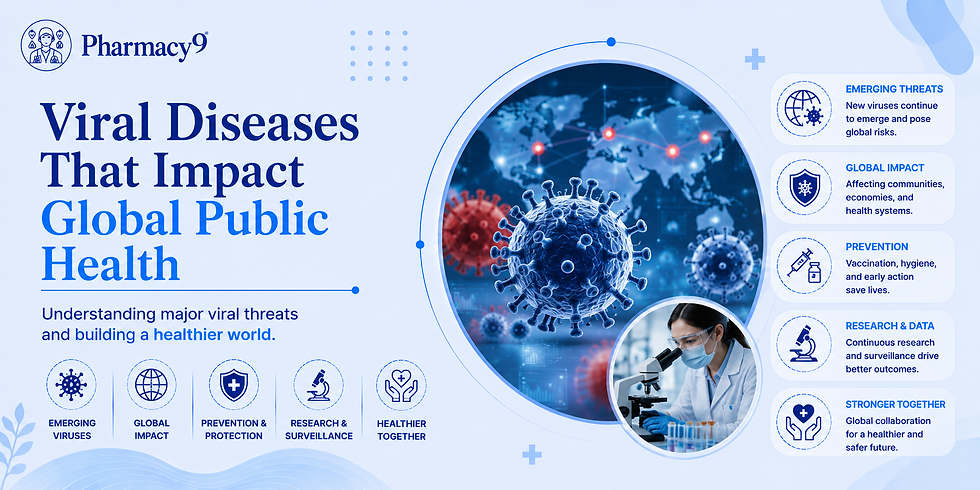
What Are Viral Diseases?
Viral diseases occur when viruses enter the body, infect cells, and replicate.
Unlike bacteria, viruses require host cells to reproduce.
Viral infections can affect:
The respiratory system
The digestive system
The nervous system
The liver
The immune system
Multiple organ systems
Disease severity varies depending on the virus, host factors, and overall health status.
Why Viral Diseases Matter in Public Health
Public health experts monitor viral diseases because they can:
Spread rapidly through populations
Cause widespread illness
Increase healthcare demands
Affect vulnerable populations
Contribute to economic disruption
Understanding disease patterns helps public health organizations develop effective prevention and response strategies.
COVID-19
One of the most significant public health events in recent history has been COVID-19 .
Caused by the SARS-CoV-2 virus, COVID-19 affected countries worldwide and highlighted the importance of:
Disease surveillance
Vaccination efforts
Public health preparedness
Global research collaboration
Researchers continue studying the long-term effects and evolving characteristics of the virus.
Influenza (Flu)
Influenza remains one of the most common viral respiratory illnesses globally.
Seasonal flu outbreaks occur annually and can lead to:
Fever
Cough
Fatigue
Respiratory complications
Public health strategies often focus on:
Vaccination programs
Surveillance systems
Public awareness campaigns
These efforts help reduce the overall impact of seasonal outbreaks.
Hepatitis Viruses
Several forms of Viral Hepatitis affect millions of people worldwide.
Common types include:
Hepatitis A
Hepatitis B
Hepatitis C
These viruses primarily affect the liver and may lead to:
Inflammation
Chronic liver disease
Liver complications
Prevention strategies vary depending on the specific type of hepatitis.
Human Immunodeficiency Virus (HIV)
HIV/AIDS remains a significant global health concern.
HIV affects the immune system and can increase vulnerability to other infections if not properly managed.
Major public health priorities include:
Prevention education
Early diagnosis
Access to treatment
Long-term disease management
Advances in treatment have significantly improved outcomes for many individuals living with HIV.
Dengue Fever
Dengue Fever is a mosquito-borne viral disease affecting many tropical and subtropical regions.
Symptoms may include:
Fever
Headache
Muscle pain
Joint pain
Public health efforts often focus on:
Mosquito control programs
Community education
Environmental management
Climate and environmental factors can influence dengue transmission patterns.
Viral Diseases Overview Table
Viral Disease | Primary Transmission Method |
COVID-19 | Respiratory droplets and aerosols |
Influenza | Respiratory droplets |
Hepatitis A | Contaminated food and water |
Hepatitis B | Blood and bodily fluids |
Hepatitis C | Blood exposure |
HIV | Blood and bodily fluids |
Mosquito bites | |
Measles | Airborne transmission |
Polio | Contaminated food and water |
Measles
Measles AT remains one of the most contagious viral diseases known.
Symptoms may include:
Fever
Rash
Cough
Eye irritation
Vaccination programs have dramatically reduced measles cases in many countries, though outbreaks can still occur when vaccination coverage declines.
Polio
Polio AT once caused widespread illness and disability worldwide.
Global vaccination efforts have significantly reduced cases and brought the disease close to eradication in many regions.
Public health organizations continue monitoring and responding to remaining transmission areas.
Emerging Viral Threats
Scientists continually monitor emerging infectious diseases.
Factors contributing to emerging viral threats include:
Global travel
Urbanization
Environmental changes
Animal-to-human transmission
Population density
Ongoing surveillance helps identify potential outbreaks before they become widespread.
The Role of Vaccination
Vaccination remains one of the most effective public health tools available.
Vaccines have helped reduce or control diseases such as:
Polio
Measles
Hepatitis B
COVID-19
Vaccination programs contribute to both individual protection and community health.
Public Health Prevention Strategies
Successful disease prevention often involves multiple approaches.
Common strategies include:
Vaccination Programs
Vaccines help reduce disease transmission and severity.
Hygiene Practices
Examples include:
Handwashing
Safe food preparation
Respiratory hygiene
Disease Surveillance
Monitoring systems help identify outbreaks and guide public health responses.
Community Education
Public awareness supports informed decision-making and preventive behaviors.
Global Health Organizations and Disease Monitoring
Several organizations play important roles in monitoring infectious diseases.
These include:
World Health Organization (WHO)
Centers for Disease Control and Prevention (CDC)
National public health agencies
Research institutions
Their work supports outbreak detection, research, and global health preparedness.
Future Challenges in Viral Disease Control
Despite significant progress, challenges remain.
These include:
Emerging viruses
Vaccine accessibility
Global healthcare disparities
Antiviral research needs
Climate-related health impacts
Addressing these issues requires ongoing international cooperation and scientific innovation.
Why Public Awareness Matters
Public understanding of viral diseases helps support:
Early recognition of symptoms
Preventive health behaviors
Vaccination participation
Community protection
Improved public health outcomes
Education remains one of the most effective tools for promoting healthier communities.
"Public health is strengthened when individuals understand how diseases spread and how preventive actions can help protect entire communities."
Conclusion
Viral diseases continue to shape global public health through their impact on individuals, healthcare systems, and societies worldwide. Conditions such as COVID-19 , Influenza , Viral Hepatitis , HIV/AIDS , Dengue Fever , Measles , and Polio highlight the importance of prevention, education, vaccination, and disease surveillance.
Pharmacy9, we believe that informed communities are better equipped to support public health efforts and make proactive healthcare decisions. While medical science continues advancing our understanding of viral diseases, ongoing awareness and prevention remain essential for protecting global health.
By staying informed and following evidence-based public health recommendations, individuals can contribute to healthier communities and stronger disease prevention efforts worldwide.


FAQ Section
1: What are viral diseases?
Viral diseases are illnesses caused by viruses that infect and replicate within the body's cells.
2: Why are viral diseases important in public health?
They can spread rapidly, affect large populations, and place significant demands on healthcare systems.
3: How do viral diseases spread?
Transmission methods vary and may include respiratory droplets, blood exposure, contaminated food or water, insect vectors, and direct contact.
4: What role do vaccines play?
Vaccines help reduce disease transmission, prevent severe illness, and support community health protection.
5: What are emerging viral diseases?
Emerging viral diseases are newly identified or rapidly spreading infections that may pose public health challenges.
6: How can individuals help prevent viral disease spread?
Practicing good hygiene, staying informed, following public health guidance, and receiving recommended vaccinations can help reduce risk.


Comments