Chemotherapy, Radiation & Immunotherapy Explained

Cancer treatment has advanced significantly over the past few decades. Thanks to modern medical research, patients now have access to multiple cancer treatment options that improve survival rates and quality of life.
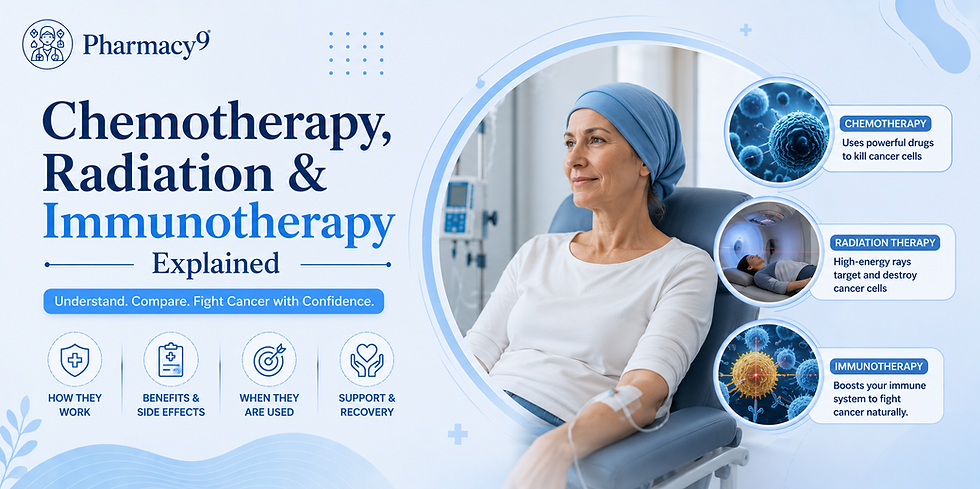
In this detailed cancer guide by Pharmacy9, we explain the three major types of cancer treatment: chemotherapy, radiation therapy, and immunotherapy. Understanding how these treatments work can help patients and families make informed decisions.
What is Cancer Treatment?
Cancer treatment refers to medical therapies used to destroy cancer cells, shrink tumors, or prevent cancer from spreading. The type of treatment recommended depends on:
Type of cancer
Stage of cancer
Patient’s age and health condition
Location of tumor
Genetic factors
Modern cancer therapy options often combine multiple treatments for better outcomes.
1. Chemotherapy Explained
What is Chemotherapy?
Chemotherapy is a type of cancer treatment that uses powerful drugs to kill fast-growing cancer cells. It is one of the most common and widely used cancer therapies.
How Chemotherapy Works
Chemotherapy works by targeting rapidly dividing cells. Since cancer cells grow and multiply quickly, chemotherapy drugs destroy them or stop their growth.
However, chemotherapy can also affect healthy fast-growing cells such as:
Hair follicles
Digestive tract cells
Bone marrow cells
This explains many of the common side effects of chemotherapy.
Types of Chemotherapy
Curative chemotherapy – to eliminate cancer completely
Adjuvant chemotherapy – after surgery to kill remaining cells
Neoadjuvant chemotherapy – before surgery to shrink tumors
Palliative chemotherapy – to relieve symptoms in advanced cancer
Side Effects of Chemotherapy
Common side effects include:
Hair loss
Nausea and vomiting
Fatigue
Low immunity
Mouth sores
Anemia
These cancer treatment side effects vary depending on the drug type and dosage. Fortunately, modern medicines help manage these symptoms effectively.
2. Radiation Therapy Explained
What is Radiation Therapy?
Radiation therapy uses high-energy radiation beams to destroy cancer cells. It is often used for localized tumors and can be combined with chemotherapy.
How Radiation Therapy Works
Radiation damages the DNA inside cancer cells, preventing them from multiplying. Over time, the damaged cancer cells die.
This method is commonly used for:
Breast cancer
Prostate cancer
Brain tumors
Lung cancer
Types of Radiation Therapy
External beam radiation therapy – radiation delivered from a machine outside the body
Internal radiation (brachytherapy) – radioactive material placed inside the body near the tumor
Radiation Treatment Side Effects
Possible side effects include:
Skin irritation
Fatigue
Swelling
Hair loss in treated area
Difficulty swallowing (if throat is treated)
Compared to chemotherapy, radiation treatment for cancer typically affects only the targeted area.
3. Immunotherapy Explained
What is Immunotherapy?
Immunotherapy is one of the most advanced and promising modern cancer treatments. It helps the body's immune system recognize and attack cancer cells.
Unlike chemotherapy, immunotherapy does not directly kill cancer cells. Instead, it boosts the immune response.
How Does Immunotherapy Treat Cancer?
Cancer cells often hide from the immune system. Immunotherapy works by:
Blocking immune checkpoints
Stimulating immune cells
Marking cancer cells for destruction
Common immunotherapy drugs include checkpoint inhibitors and monoclonal antibodies.
Types of Immunotherapy
Checkpoint inhibitors
CAR T-cell therapy
Cancer vaccines
Monoclonal antibodies
Immunotherapy has shown great success in treating:
Melanoma
Lung cancer
Kidney cancer
Blood cancers
Side Effects of Immunotherapy
Although generally better tolerated, immunotherapy can cause:
Fever
Fatigue
Skin reactions
Autoimmune reactions
Side effects occur because the immune system becomes more active.
Difference Between Chemotherapy and Radiation Therapy
Many patients ask about the difference between chemotherapy and radiation therapy.
Feature | Chemotherapy | Radiation Therapy |
Treatment Type | Drug-based | Radiation-based |
Target Area | Whole body | Specific area |
Main Use | Spread cancers | Local tumors |
Common Side Effects | Hair loss, nausea | Skin irritation, fatigue |
Doctors often combine both treatments for better results.
Which Cancer Treatment is Most Effective?
There is no single answer to which cancer treatment is most effective. The best option depends on:
Cancer type
Stage
Genetic mutations
Overall health
For example:
Early-stage cancer may respond well to surgery + radiation.
Advanced cancers may need chemotherapy + immunotherapy.
Modern oncology focuses on personalized treatment plans.
Cancer Treatment Options for Different Types of Cancer
Different cancers require different strategies:
Breast cancer – Surgery + radiation + hormone therapy
Lung cancer – Chemotherapy + immunotherapy
Blood cancer – Chemotherapy + CAR T-cell therapy
Prostate cancer – Radiation therapy
A multidisciplinary oncology team decides the best treatment options.
Managing Cancer Treatment Side Effects
Managing cancer treatment side effects is an essential part of cancer care.
Tips include:
Balanced diet
Staying hydrated
Adequate rest
Light exercise
Emotional support
Regular follow-up visits
Supportive medicines can help control nausea, infections, and pain.
Future of Cancer Treatment
Medical research continues to improve modern cancer treatments. Advances include:
Targeted therapy
Precision medicine
Gene therapy
Combination immunotherapy
These innovations aim to make cancer treatment more effective and less toxic.
Final Thoughts
Understanding chemotherapy, radiation therapy, and immunotherapy empowers patients to make informed decisions. Every cancer case is unique, and treatment should always be personalized.
At Pharmacy9, our mission is to provide trusted health information and reliable prescription guidance. If you or a loved one is undergoing cancer treatment, consult a qualified oncologist to determine the safest and most effective plan.
Stay informed. Stay strong.

(FAQs)
1. What is the main goal of cancer treatment?
The goal is to cure cancer, control its growth, or relieve symptoms depending on the stage.
2. How does chemotherapy work?
Chemotherapy kills fast-growing cancer cells by damaging their DNA.
3. What is radiation therapy used for?
Radiation therapy treats localized tumors by destroying cancer cells in a specific area.
4. How does immunotherapy treat cancer?
Immunotherapy boosts the immune system to recognize and attack cancer cells.
5. What are the common side effects of cancer treatment?
Hair loss, fatigue, nausea, skin reactions, and low immunity are common.
6. Is immunotherapy safer than chemotherapy?
Immunotherapy often has fewer side effects, but it can still cause immune-related reactions.
7. Can cancer be treated with only one therapy?
Some early cancers require only one treatment, but many cases need combination therapy.
8. How long does cancer treatment last?
It depends on the type and stage of cancer. Treatment may last weeks to months.

Comments