Conjunctivitis (Pink Eye): Symptoms, Treatment & Prevention

Introduction
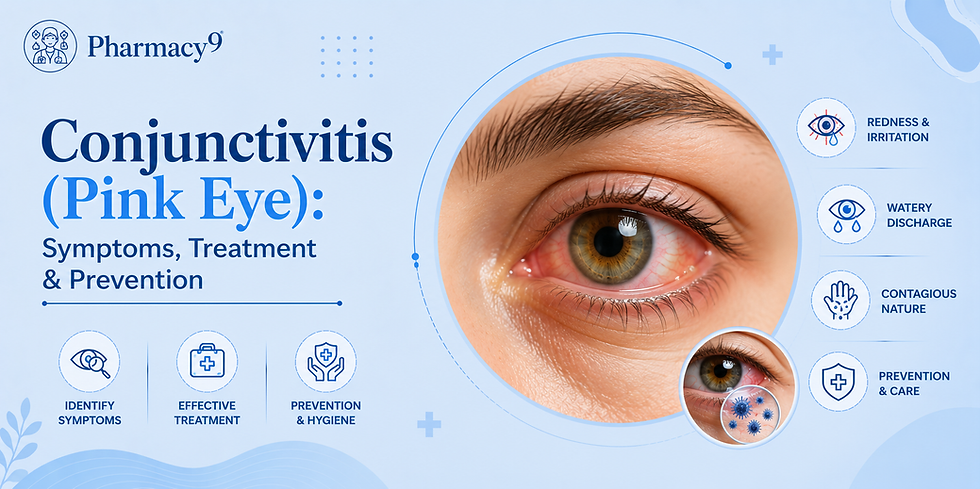
Conjunctivitis, commonly known as Pink Eye, is one of the most frequent eye infections affecting both children and adults. It causes redness, irritation, discharge, and sometimes swelling of the eyes. While most cases are mild and resolve within a few days, some forms require proper medical attention and treatment.
At Pharmacy9, we provide reliable health information to help you understand symptoms, choose the right pink eye treatment, and prevent the spread of this contagious eye infection.
What is Conjunctivitis?
Conjunctivitis is the inflammation of the conjunctiva — the thin, transparent membrane that covers the white part of the eye and lines the inside of the eyelids. When this membrane becomes irritated or infected, it leads to eye redness, swelling, itching, and discharge.
It can affect one or both eyes and may spread easily depending on the cause.
Types of Conjunctivitis
Understanding the type of conjunctivitis is essential for choosing the best conjunctivitis treatment.
1. Viral Conjunctivitis
Viral conjunctivitis is the most common type. It is usually caused by viruses such as the common cold virus.
Watery discharge
Red, irritated eyes
Highly contagious
May spread from one eye to the other
This type typically clears up within 7–14 days without antibiotics.
2. Bacterial Conjunctivitis
Bacterial conjunctivitis is caused by bacteria and often produces thick, yellow or green eye discharge.
Sticky eyelids, especially in the morning
Swollen eyelids
Moderate redness
Requires antibiotic eye drops in many cases
3. Allergic Conjunctivitis
Allergic conjunctivitis occurs due to allergens such as pollen, dust, or pet dander.
Severe itching
Watery eyes
Affects both eyes
Not contagious
This form improves with antihistamines or allergy relief medications.
Pink Eye Symptoms
Recognizing pink eye symptoms early can help prevent complications and spreading.
Common symptoms include:
Eye redness
Burning sensation
Gritty feeling in the eye
Watery or thick eye discharge
Crusting around eyelids
Light sensitivity
Swollen eyelids
If symptoms worsen or vision becomes blurry, seek medical advice immediately.
Causes of Conjunctivitis
The most common red eye causes include:
Viral infections
Bacterial infections
Allergic reactions
Contact lens misuse
Exposure to smoke or chemicals
Poor hygiene
Understanding the cause helps determine whether you need antibiotic drops or simple home care tips.
Is Conjunctivitis Contagious?
One of the most common questions is: Is conjunctivitis contagious?
Viral conjunctivitis: Highly contagious
Bacterial conjunctivitis: Contagious
Allergic conjunctivitis: Not contagious
Pink eye spreads through direct contact, contaminated surfaces, towels, eye makeup, or touching infected eyes.
Conjunctivitis Treatment Options
Treatment depends on the type of infection.
1. Viral Pink Eye Treatment
There is no specific antiviral medication for most cases. Focus on eye infection relief through:
Cold compress
Artificial tears
Good hygiene
Avoiding contact lenses
Recovery usually takes 1–2 weeks.
2. Bacterial Pink Eye Treatment
Doctors may prescribe antibiotic eye drops or ointments.
Complete the full course
Avoid sharing towels
Clean eye discharge gently
Improvement is often seen within 2–3 days after starting antibiotic drops.
3. Allergic Pink Eye Treatment
Treatment includes:
Antihistamine eye drops
Avoiding allergens
Cold compress
Over-the-counter allergy medication
How to Treat Conjunctivitis at Home Safely
If symptoms are mild, follow these home care tips:
Wash hands frequently
Avoid rubbing eyes
Use clean tissues
Wash pillowcases daily
Stop wearing contact lenses
Use separate towels
These steps help reduce the spread of contagious eye infection.
How Long Does Pink Eye Last?
Duration depends on the type:
Viral conjunctivitis: 7–14 days
Bacterial conjunctivitis: 3–7 days with treatment
Allergic conjunctivitis: Until allergen exposure continues
If symptoms persist beyond two weeks, consult a healthcare provider.
Pink Eye vs Eye Allergy
Many people confuse pink eye vs eye allergy.
Feature | Viral/Bacterial | Allergic |
Contagious | Yes | No |
Itching | Mild | Severe |
Discharge | Thick or watery | Watery |
Affects both eyes | Sometimes | Usually |
Knowing the difference ensures proper conjunctivitis treatment.
When to See a Doctor
Seek medical care if:
Severe eye pain
Blurred vision
Light sensitivity
Symptoms worsen
Thick green discharge
No improvement after 5 days
Children, newborns, and contact lens users should consult a doctor quickly.
Prevention Tips
Preventing conjunctivitis is simple with proper hygiene:
Wash hands regularly
Avoid touching eyes
Disinfect surfaces
Do not share cosmetics
Replace old eye makeup
Clean contact lenses properly
Practicing these habits reduces risk of eye infection.
Complications of Untreated Conjunctivitis
Though rare, untreated bacterial conjunctivitis may cause:
Corneal infection
Vision issues
Chronic inflammation
Early pink eye treatment prevents complications.
Final Thoughts
Conjunctivitis (Pink Eye) is a common but manageable eye infection. Understanding the difference between viral conjunctivitis, bacterial conjunctivitis, and allergic conjunctivitis helps in choosing the correct treatment. Most cases are mild, but proper hygiene and early care are essential to prevent complications.
If you experience persistent eye redness, severe symptoms, or vision problems, consult a healthcare professional promptly.
For more trusted health information and pharmacy guidance, stay connected with Pharmacy9 — your reliable source for safe and updated medical insights.


(FAQs)
1. What is conjunctivitis?
Conjunctivitis is inflammation of the conjunctiva causing eye redness, irritation, and discharge.
2. Is pink eye contagious?
Yes, viral and bacterial conjunctivitis are contagious.
3. How long is pink eye contagious in adults?
It remains contagious while symptoms like discharge and tearing are present.
4. What are the best antibiotic eye drops for bacterial conjunctivitis?
Doctors usually prescribe broad-spectrum antibiotic drops based on severity.
5. Can I go to work with pink eye?
Avoid work or school if it is contagious to prevent spreading.
6. How long does pink eye last?
Most cases resolve within 1–2 weeks.
7. What are signs that pink eye is getting worse?
Increased pain, vision changes, or swelling require medical attention.
8. Can I use contact lenses during infection?
No, avoid contact lenses until full recovery.
9. Are home remedies effective?
Mild cases improve with proper hygiene and supportive care.
10. How can I prevent conjunctivitis?
Practice good hygiene and avoid sharing personal items.


Comments